
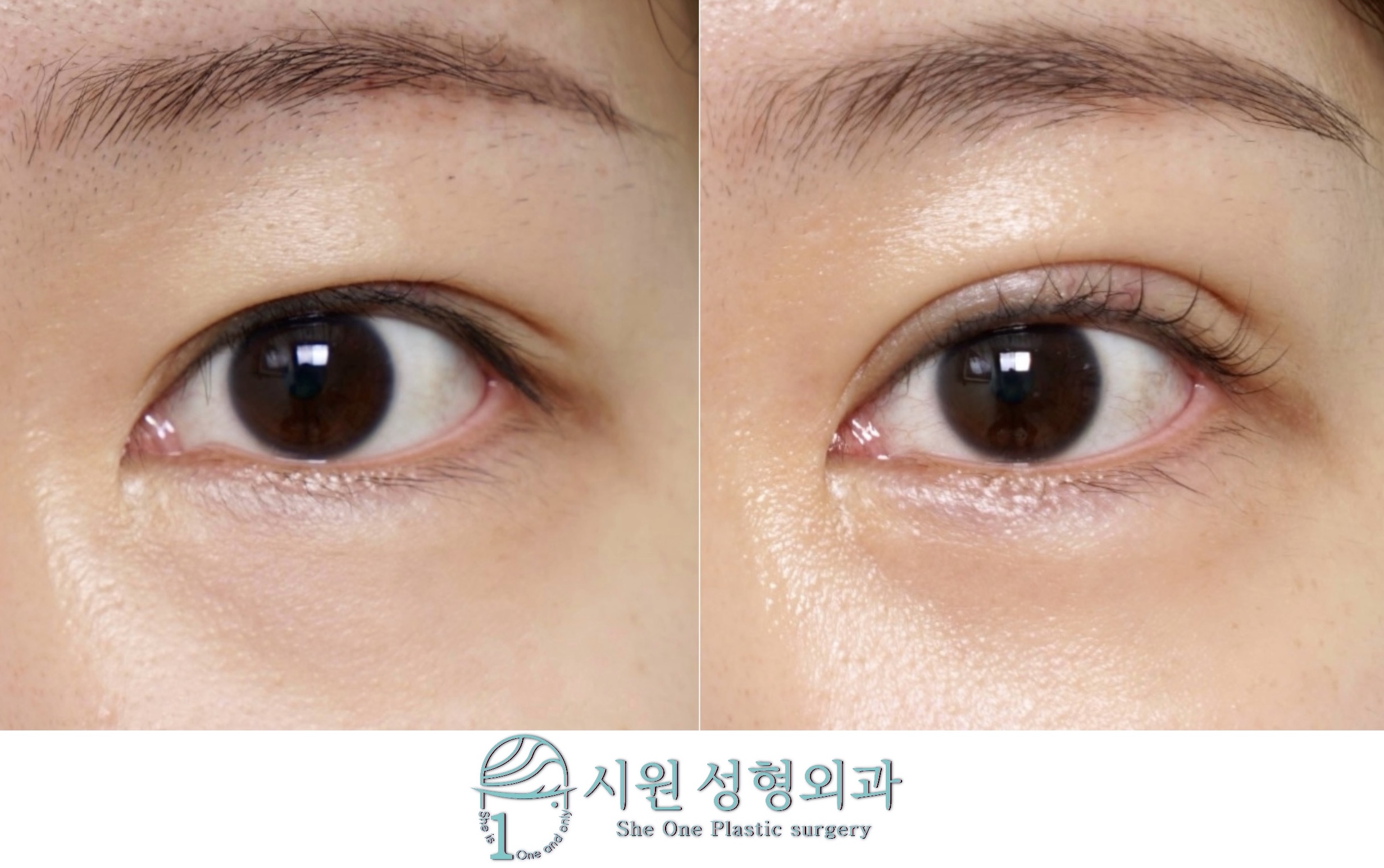
Lower eyelid fat repositioning is considered because the three-dimensional contouring in this area is a primary factor that darkens the complexion and creates an aged appearance. This phenomenon is not merely an issue of superficial pigmentation or lack of sleep; rather, it is an anatomical symptom caused by changes in the arrangement of the internal soft tissues supporting the eyeball.
Attempting to simply tighten the skin surface or conceal the area with cosmetics cannot be a fundamental solution. A surgical correction that reduces the protruding soft tissue and fills in the depressed areas is required. In this column, we will examine the anatomical causes of lower eyelid contouring and objectively analyze the clinical progress 2 months after restoring a smooth structure through lower eyelid fat repositioning at Sheone Plastic Surgery.
1. Anatomical Factors Causing Lower Eyelid Contours
Relaxation of the Orbital Septum and Under-Eye Fat Bulging
Around the eyeball, there is a layer of orbital fat designed to absorb external impact, and this fat is firmly supported by a thin membrane known as the orbital septum. However, due to congenital factors or the passage of time, the tension of the orbital septum weakens. As a result, the internal fat can no longer withstand gravity and is pushed forward. This causes the under-eye skin to rise, creating a protruding bulge.
Accompanied by Tear Trough Depression
As the fat is pushed forward, the lower boundary of the fat—where the tissue is relatively thin and strongly attached by ligaments—becomes deeply depressed. This sunken line below the protruding area is referred to as a tear trough. The elevation difference between the bulge and the depression creates a dark shadow under the eyes.
2. Principles of Lower Eyelid Fat Repositioning for Stable Structural Improvement
In the past, simply removing the protruding fat was the primary method. However, excessively excising the surplus tissue often led to limitations, such as a hollowed-out appearance under the eyes or the worsening of fine lines over time. To compensate for this, modern procedures mainly apply a repositioning technique that flattens the contour while preserving the anatomical structure.
-
Conservative Approach and Repositioning : After partially reducing only the volume of the unnecessarily protruding fat, the remaining fat tissue is pulled down into the depressed tear trough space to fill the void.
-
Transconjunctival Approach : Instead of incising the outer skin, surgical access is made microscopically through the conjunctiva, the red mucous membrane inside the eyelid. This leaves no visible scars on the outer skin after surgery and is advantageous for recovery as there are no stitches to remove.
-
Strengthening the Orbital Septum : To prevent the repositioned fat from bulging out again, the loosened orbital septum is fixed tightly overall, fundamentally reinforcing the supporting power of the internal structure of the lower eyelid.
3. Clinical Case: Structural Stabilization 2 Months After Under-Eye Fat Repositioning
To observe how these principles are applied and how the area recovers in actual clinical practice, we will review the 2-month progress of a patient who underwent surgery at our clinic.
Preoperative Diagnosis Upon visiting the clinic, the patient exhibited a clear under-eye fat bulging as the orbital fat was pushed outward. Furthermore, a tear trough had formed below the protruding area, creating an overall dark shadow under the eyes.
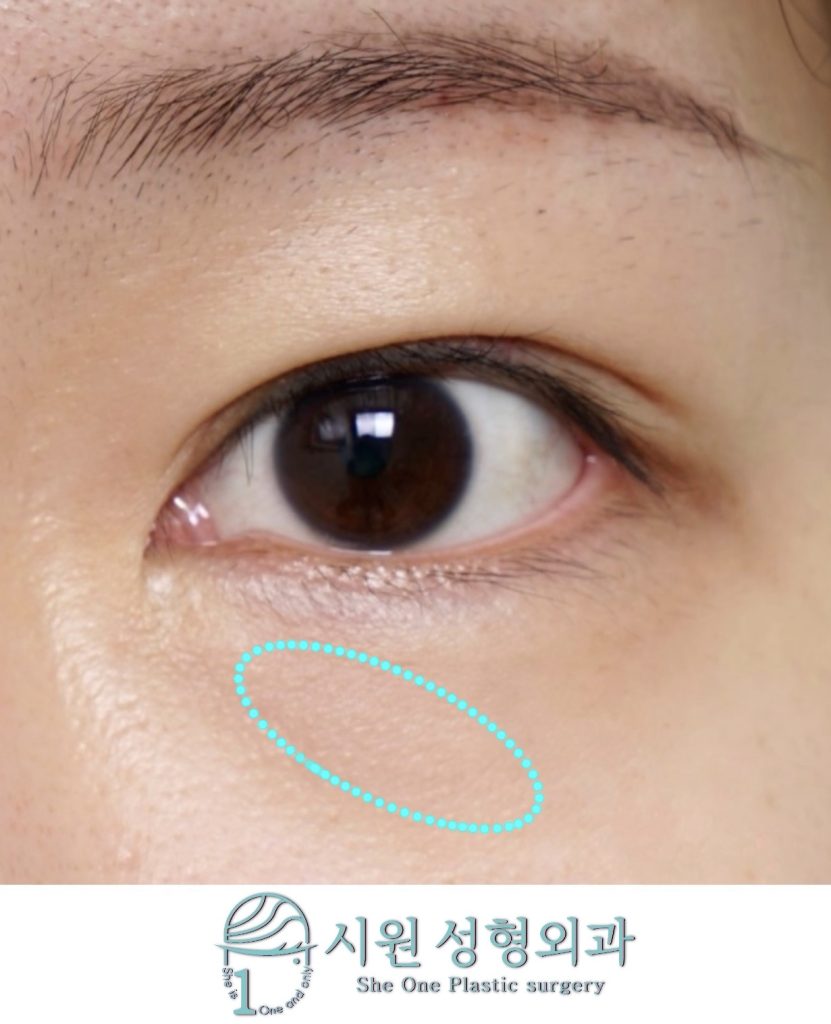
Preoperative state of lower eyelid fat bulging
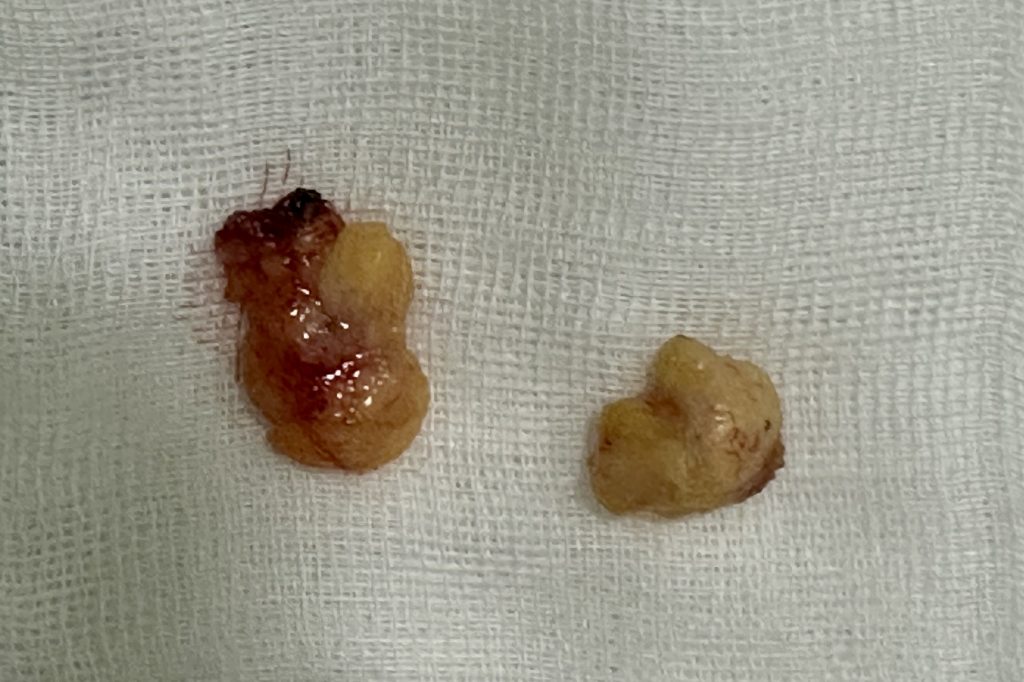
Excess fat tissue separated from the patient during the procedure.
Only the portion causing excessive volume is safely excised, and the remaining fat is relocated to the depressed area.
Analysis of the 2-Month Postoperative Progress This is the 2-month mark after performing fat repositioning and orbital septum fixation via the transconjunctival approach.
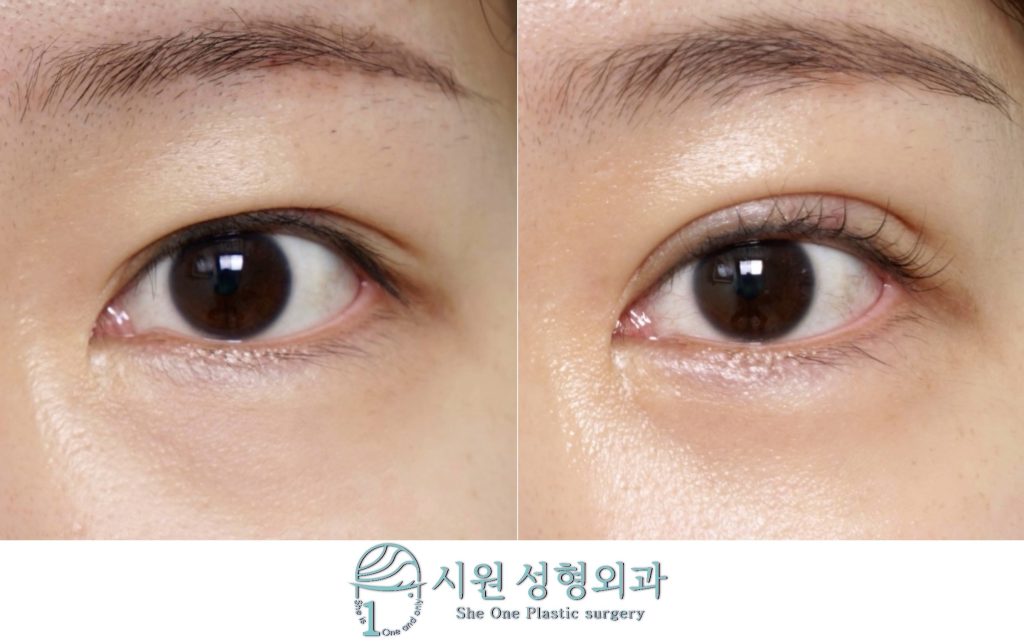
Frontal comparison of lower eyelid fat repositioning after 2 months
- Flattening of the Lower Eyelid Structure: The protruding area that distracted the gaze has been refined, and the depressed tear trough has been properly filled with fat. As it reaches the 2-month mark, the tissue has engrafted, smoothing and organizing the previously contoured under-eye structure, visibly clearing the dark shadows.
-
Maintenance of Morphological Stability : No scars occurred on the outer skin. The natural curve of the eye is comfortably maintained without ectropion (eyelid turning outward), a potential complication after such surgeries.
4. Sheone Plastic Surgery’s Treatment Principles Considering 3D Balance
Sheone Plastic Surgery focuses its capabilities on eye surgery and complex eye revision surgeries. The process of refining the contour of the lower eyelid requires more than simple excision; it demands a calm medical approach that comprehensively diagnoses the varying amounts of orbital fat, skin thickness, and septal support in each patient to weave a solid internal structure.
Based on objective diagnosis, our clinic avoids unreasonable over-treatment. We strive to provide honest and clear solutions that meet the patient’s anatomical conditions, helping them restore comfort in their daily lives.
* Before and after photos of this patient are available on the She One Plastic Surgery official blog. *
See the actual 2-month progress
A case from our official Naver blog. See the full photo series.
The before and after photos featured in this post are shared with the patient’s explicit consent in accordance with the Medical Service Act. Please note that individual recovery times and surgical results may vary, and potential side effects can occur. We strongly advise a comprehensive consultation with our medical team before making any surgical decisions.
Official WebsiteProcedures and medical staff›
KakaoTalk ConsultationSend us photos and ask›
LINE ConsultationEasier if you are outside Korea›
DirectionsApgujeong Stn. · JJ Building 2F›
2F, JJ Building, 19 Apgujeong-ro 28-gil, Gangnam-gu, Seoul, Korea
Mon–Fri 10:00 – 19:00 · Sat 10:00 – 16:00
Closed Sun & public holidays · 02-512-1889
